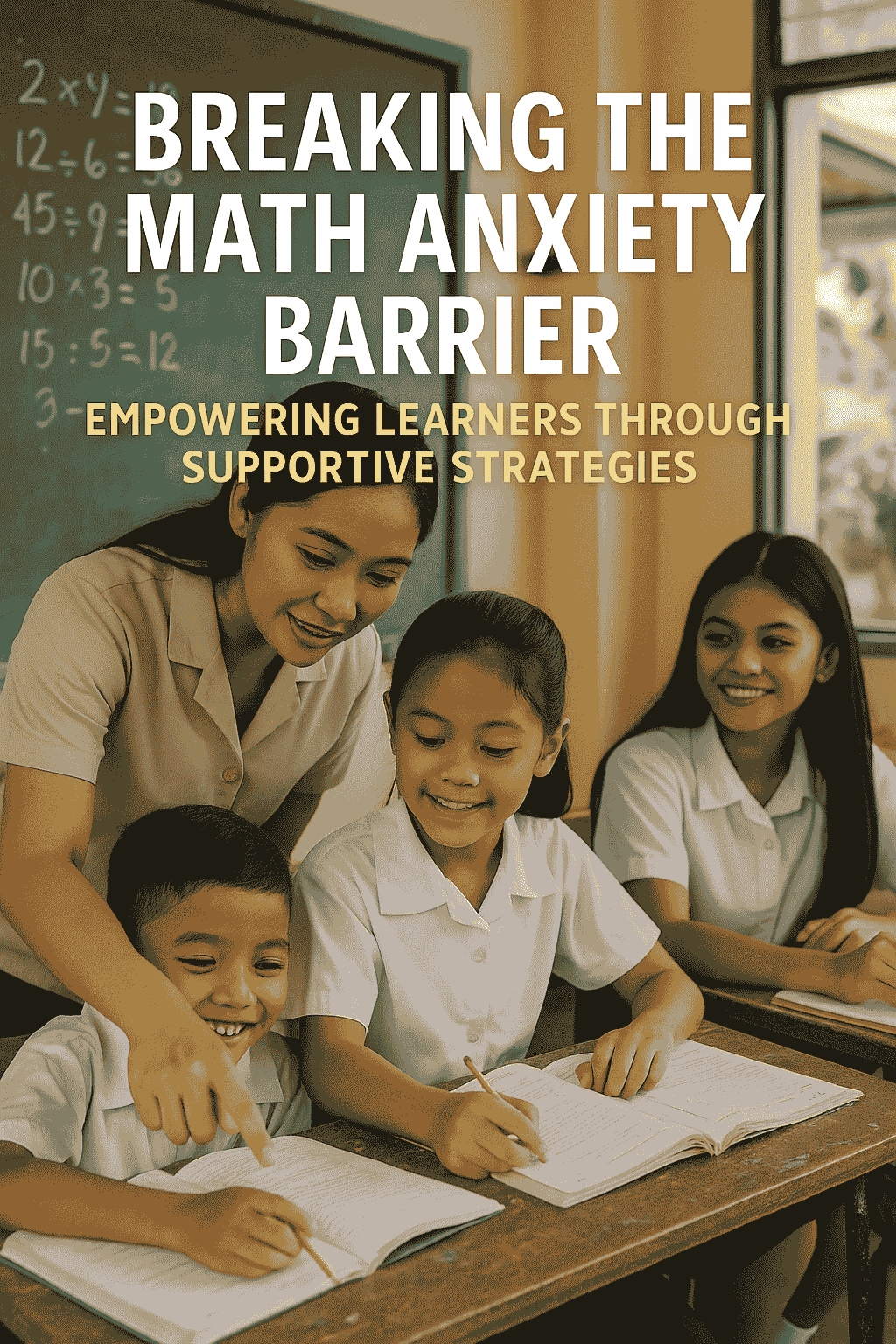
Breaking the Math Anxiety Barrier
Empowering Learners Through Supportive Strategies
DOI:
https://doi.org/10.62596/eir.c97ee072Keywords:
Math Anxiety, Generation Z, Instructional StrategiesAbstract
This paper explores the persistent challenge of math anxiety among Generation Z learners and presents strategies to transform mathematics into an empowering discipline. Grounded in research on attention spans, collaborative learning, multimedia resources, and gamification, it emphasizes the importance of aligning instructional methods with learner preferences while addressing psychological barriers. By fostering supportive environments, teachers can dismantle fear, build resilience, and enhance mathematical competence.
References
Aker, M., Herrera, L. J. P., & Daniel, L. (2018). Back to the future: The implications of service and problem-based learning in the language, literacy, and cultural acquisition of ESOL students in the 21st century. The Reading Matrix, 18(2), 165–181. https://eric.ed.gov/?id=EJ1191354
Calzada, K. P. D. (2024). Anti-dependency teaching strategy for innovation in the age of AI among technology-based students. Environment and Social Psychology, 9(8). https://doi.org/10.59429/esp.v9i8.3026
Dowker, A. (2021, February). Home numeracy and preschool children’s mathematical development: Expanding home numeracy models to include parental attitudes and emotions. Frontiers in Education, 6, 575664. Frontiers Media SA. https://doi.org/10.3389/feduc.2021.575664
Ichsan, I., Suharyat, Y., Santosa, T. A., & Satria, E. (2023). Effectiveness of STEM-based learning in teaching 21st century skills in Generation Z student in science learning: A meta-analysis. Jurnal Penelitian Pendidikan IPA, 9(1), 150–166. https://doi.org/10.29303/jppipa.v9i1.2517
Kadonsi, K. (2025). Developing mathematical resilience: Effective strategies to alleviate mathematics anxiety among secondary school students in Kalomo District, Zambia. [Unpublished manuscript].
Murro, R. A. R. A., Lobo, J. G., Inso, A. R. C., & Chavez, J. V. (2023). Difficulties of parents with low educational attainment in assisting their children in modular distance learning during pandemic. Environment and Social Psychology, 9(1). https://doi.org/10.54517/esp.v9i1.1957
Schwieger, D., & Ladwig, C. (2018). Reaching and retaining the next generation: Adapting to the expectations of Gen Z in the classroom. Information Systems Education Journal, 16(3), 45–54. http://files.eric.ed.gov/fulltext/EJ1179303.pdf
Theobald, E. J., Hill, M. J., Tran, E., Agrawal, S., Arroyo, E. N., Behling, S., Chambwe, N., Cintrón, D. L., Cooper, J. D., Dunster, G., Grummer, J. A., Hennessey, K., Hsiao, J., Iranon, N., Jones, L., Jordt, H., Keller, M., Lacey, M. E., Littlefield, C. E., … Freeman, S. (2020). Active learning narrows achievement gaps for underrepresented students in undergraduate science, technology, engineering, and math. Proceedings of the National Academy of Sciences, 117(12), 6476–6483. https://doi.org/10.1073/pnas.1916903117
Downloads
Published
Issue
Section
License
Copyright (c) 2025 EDUCATION AND INDUSTRY REVIEW

This work is licensed under a Creative Commons Attribution 4.0 International License.
How to Cite