Understanding Learners
Cognitive Approaches in Mathematics Performance
DOI:
https://doi.org/10.62596/eir.jfzs3376Keywords:
metacognition, self-regulated learning, mathematics performanceAbstract
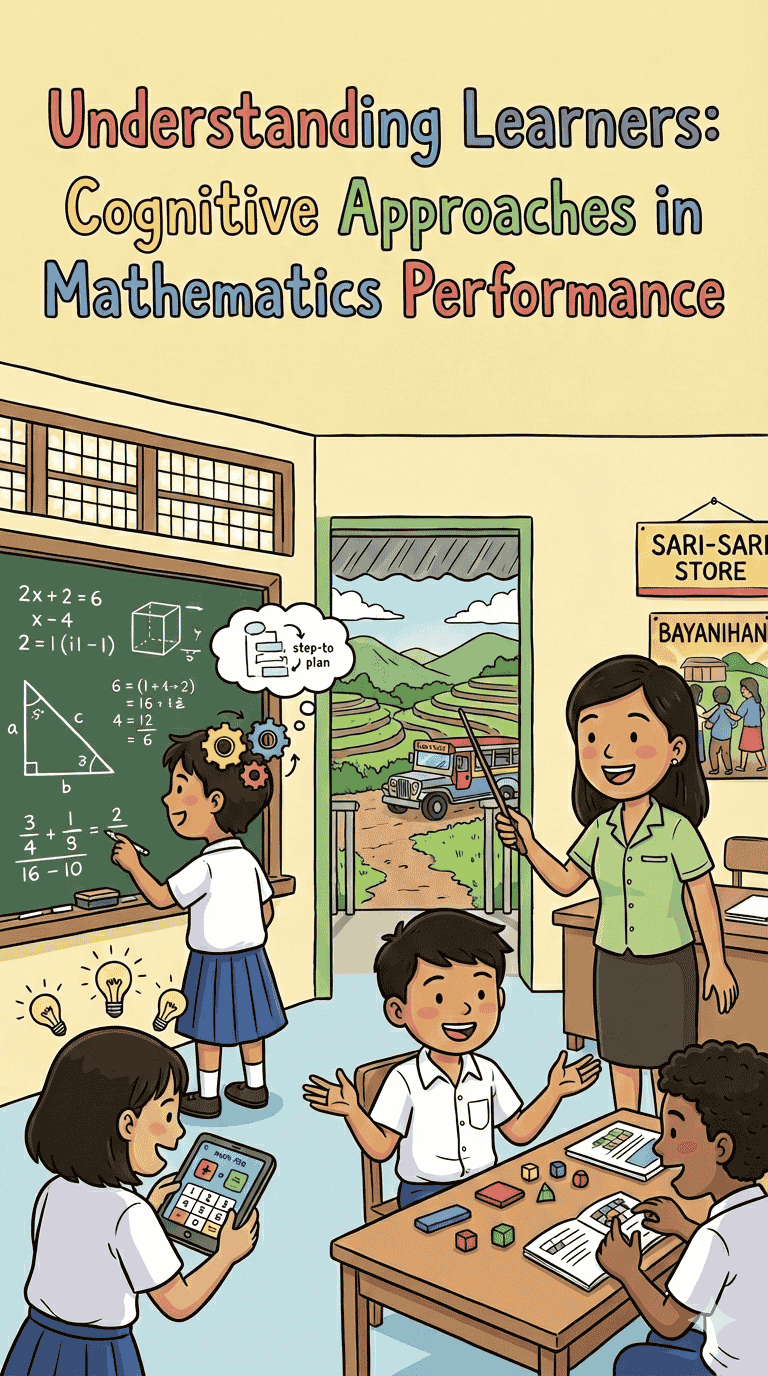
This paper examines how cognitive approaches—particularly metacognition, self-regulation, and strategic problem-solving—influence mathematics performance. Learners who actively plan, monitor, and reflect on their thinking demonstrate deeper understanding and higher achievement. Integrating reflective practices and technology-enhanced tools supports the development of effective mathematical reasoning skills.
References
Alexander, P. A., & Murphy, P. K. (1998). The research base for APA’s learner-centered psychological principles. American Psychological Association.
Hattie, J. A., & Donoghue, G. M. (2016). Learning strategies: A synthesis and conceptual model. npj Science of Learning, 1(1), 1–13.
Schraw, G., & Dennison, R. S. (1994). Assessing metacognitive awareness. Contemporary Educational Psychology, 19(4), 460–475.
VanLehn, K. (2011). The relative effectiveness of human tutoring, intelligent tutoring systems, and other tutoring systems. Educational Psychologist, 46(4), 197–221.
Zimmerman, B. J. (2002). Becoming a self-regulated learner: An overview. Theory Into Practice, 41(2), 64–70.
Downloads
Published
Issue
Section
License
Copyright (c) 2026 EDUCATION AND INDUSTRY REVIEW

This work is licensed under a Creative Commons Attribution 4.0 International License.
How to Cite