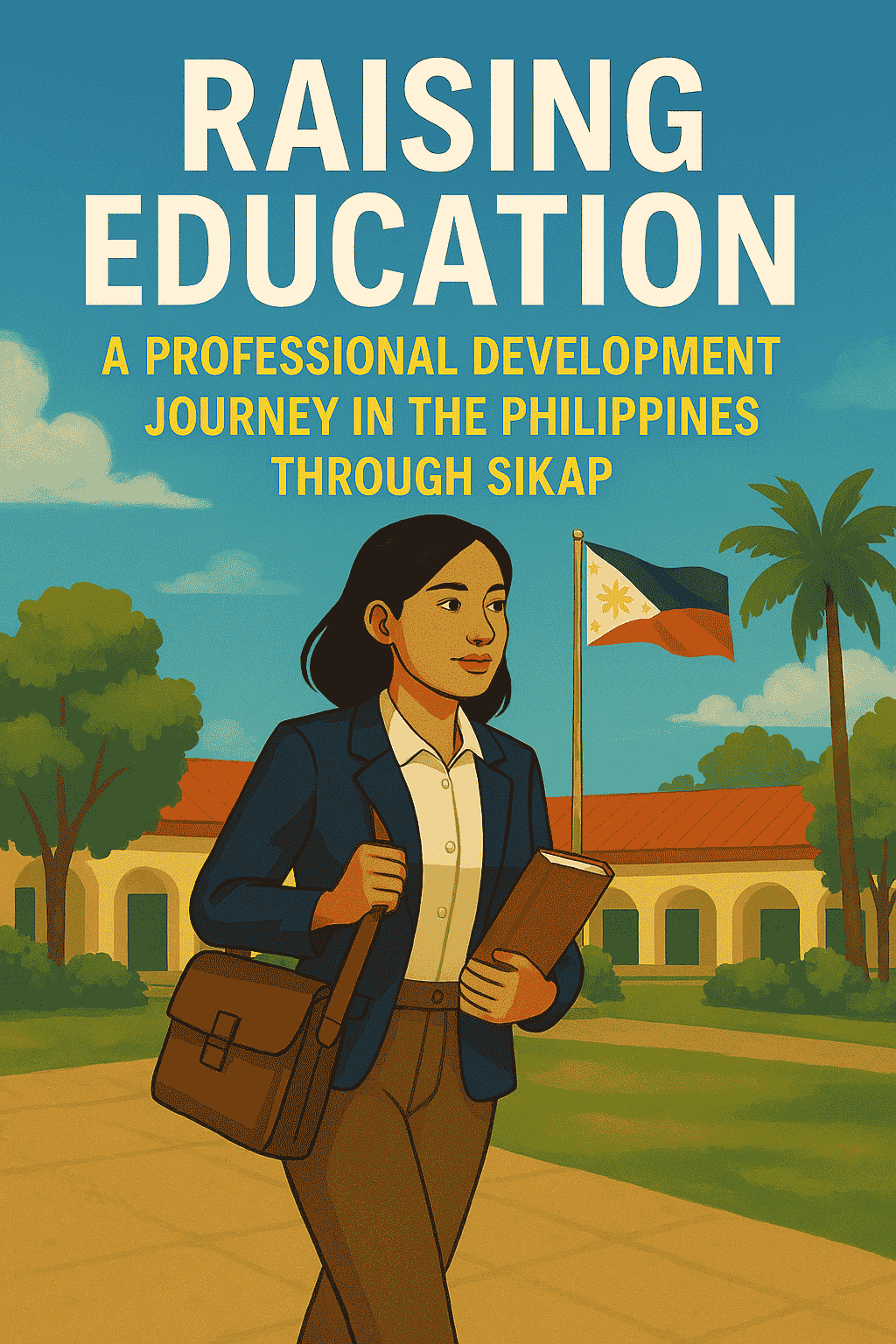
Raising Education
A Professional Development Journey in the Philippines through SIKAP
DOI:
https://doi.org/10.62596/eir.n03vvq44Keywords:
Professional Development, SIKAP, Higher EducationAbstract
This paper highlights the transformative role of the Staff and Instructor’s Knowledge Advancement Program (SIKAP) in strengthening professional development among educators in the Philippines. By removing financial barriers, SIKAP empowers faculty to pursue advanced degrees, refine pedagogical practices, and engage with global educational standards. Grounded in human capital theory, the program illustrates how strategic investment in faculty development fosters institutional growth, educational excellence, and national socio-economic progress.
References
Altbach, P. G. (2016). Global Perspectives on Higher Education. Johns Hopkins University Press.
Bates, A. W., & Poole, G. (2003). Effective Teaching with Technology in Higher Education: Foundations for Success. Jossey-Bass.
Becker, G. S. (1964). Human Capital: A Theoretical and Empirical Analysis, with Special Reference to Education. Columbia University Press.
Bland, C. J., & Bergquist, W. H. (1997). The Vitality of Senior Faculty: Preserving, Renewing, and Using Their Great Potential. Jossey-Bass.
Commission on Higher Education. (2020). Scholarships for Staff and Instructors' Knowledge Advancement Program (SIKAP). CHED. https://ched.gov.ph/sikap/
Mohamedbhai, G. (2008). The costs of higher education in Africa. Higher Education Policy, 21(4), 437–450.
Teichler, U. (2004). The changing role of the university: From the Humboldtian to the entrepreneurial university. Higher Education Management and Policy, 16(2), 1–13.
World Bank. (2018). World Development Report 2018: Learning to Realize Education's Promise. World Bank Publications.
Downloads
Published
Issue
Section
License
Copyright (c) 2025 EDUCATION AND INDUSTRY REVIEW

This work is licensed under a Creative Commons Attribution 4.0 International License.
How to Cite