How can Home Economics Empower Lives and Communities in the 21st Century?
DOI:
https://doi.org/10.62596/eir.hqega482Keywords:
Home Economics, Life Skills Education, Community DevelopmentAbstract
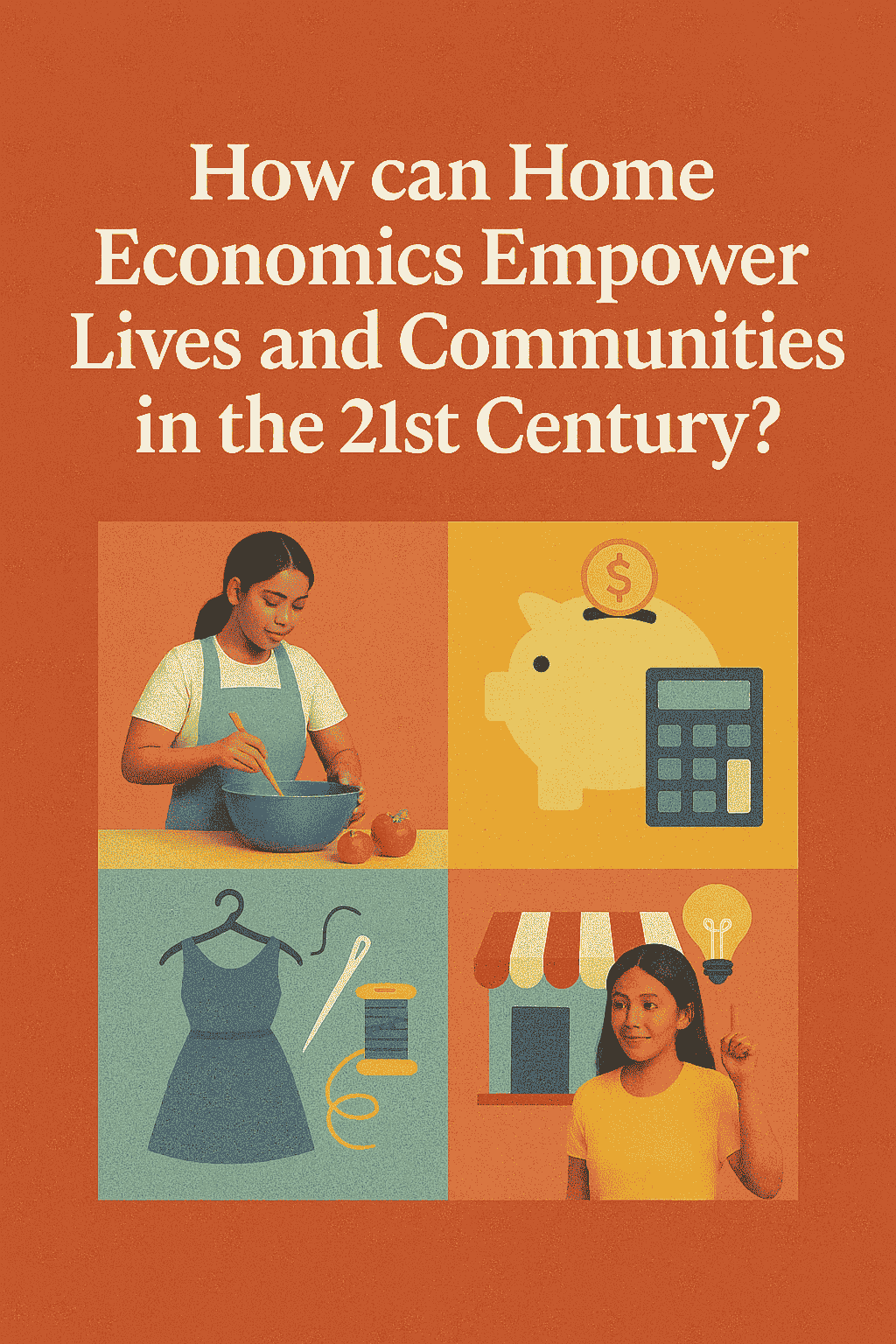
Home Economics in the Bachelor of Technology and Livelihood Education (BTLED) program empowers individuals and communities by equipping learners with essential life skills in food preparation, financial literacy, textiles, and entrepreneurship. Beyond traditional household roles, it fosters personal development, livelihood opportunities, and community resilience, particularly in underserved areas. The program also promotes gender equity and inclusive development, preparing graduates to serve as educators and change agents who contribute meaningfully to nation-building.
References
Austria, R. S., & Oliva, R. S. (2021). Home Economics as a Tool for Livelihood Skills Development in Philippine Secondary Schools. International Journal of Education and Research, 9(4), 22–30.
CHED. (2023). Policies, Standards and Guidelines for Bachelor of Technology and Livelihood Education (BTLED). Commission on Higher Education.
Dela Cruz, J. R., & Macayan, R. F. (2022). Integrating entrepreneurship in Home Economics: A strategy for sustainable livelihood education. Journal of Education and Practice, 13(5), 34–42.
Tiongco, M. C. (2021). The evolving role of Home Economics in Philippine secondary education. Asian Journal of Education and Social Studies, 15(3), 77–85.
UNESCO. (2022). Reimagining our futures together: A new social contract for education. United Nations Educational, Scientific and Cultural Organization.
Zandvliet, D., & Broda, M. (2022). Teachers as Change Agents in Vocational Education. Journal of Education and Work, 35(4), 301–316.
Downloads
Published
Issue
Section
License
Copyright (c) 2025 EDUCATION AND INDUSTRY REVIEW

This work is licensed under a Creative Commons Attribution 4.0 International License.
How to Cite