Our Voice, Our Story
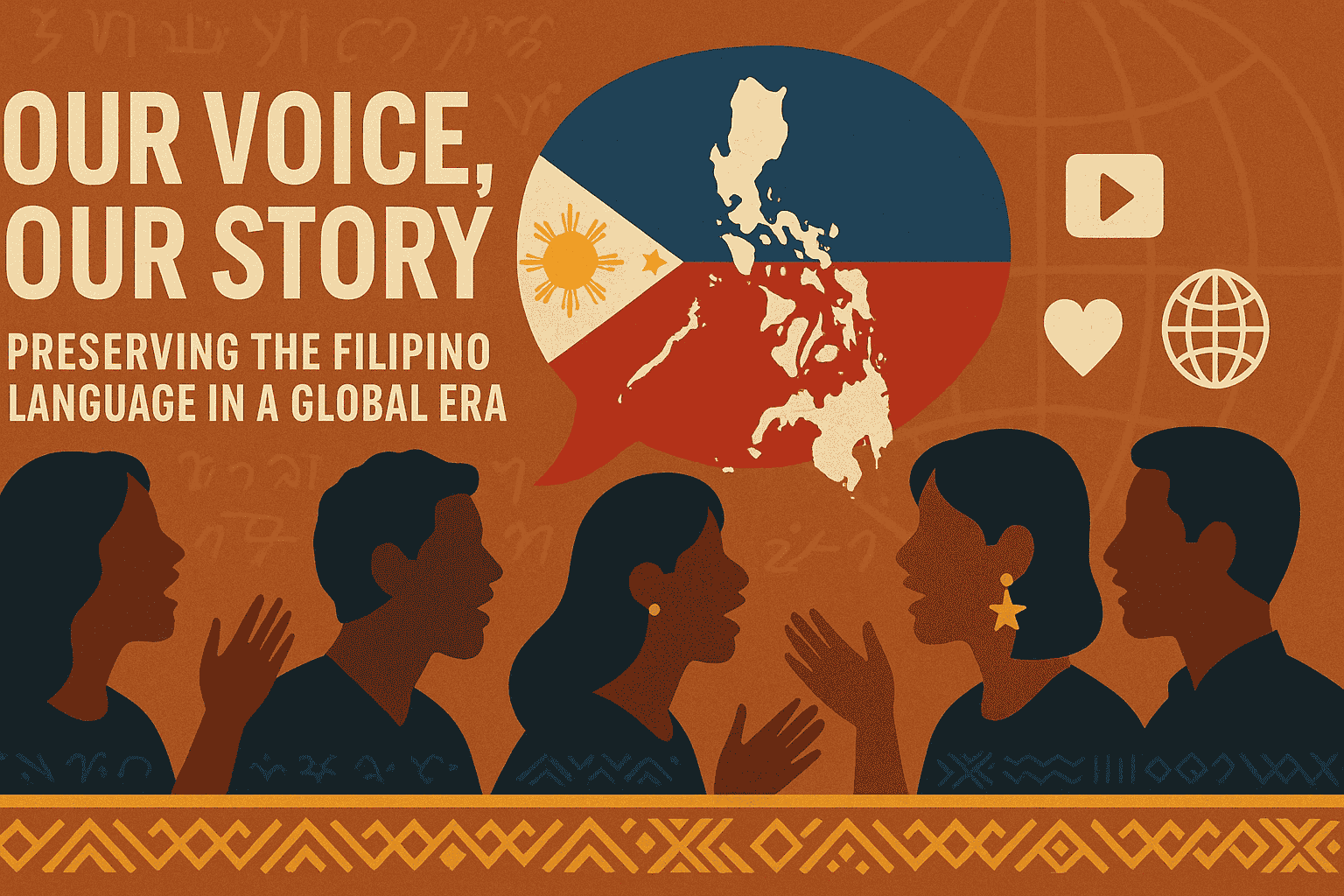
Preserving the Filipino Language in a Global Era
DOI:
https://doi.org/10.62596/eir.mnysda12Keywords:
Filipino language, cultural identity, language preservationAbstract
This paper explores the urgent need to preserve the Filipino language amid the rise of English as a dominant global language. Filipino is not only a means of communication but a vital vessel of cultural identity, history, and collective memory. The increasing preference for English in education and daily life threatens the depth and continuity of Filipino heritage. Through the perspectives of scholars and institutions, this study emphasizes the importance of fostering Filipino language use at home, in schools, and on digital platforms to sustain cultural unity and empower future generations.
References
Constantino, P. (2000). The language situation in the Philippines. In R. B. Baldauf & R. B. Kaplan (Eds.), Language planning in Nepal, Taiwan and the Philippines (pp. 211–280). Multilingual Matters.
Komisyon sa Wikang Filipino. (2018). Ulat ng Komisyon sa Wikang Filipino: Kalagayan ng Wikang Filipino sa mga Institusyon ng Edukasyon. Quezon City: KWF.
Salazar, Z. (1999). Pilipinolohiya: Kasaysayan, Pilosopiya at Pananaw. Quezon City: Palimbagan ng Lahi.
Tollefson, J. W., & Tsui, A. B. M. (2004). Medium of instruction policies: Which agenda? Whose agenda? Lawrence Erlbaum Associates.
UNESCO. (2011). Atlas of the World’s Languages in Danger. Paris: United Nations Educational, Scientific and Cultural Organization. Retrieved from http://www.unesco.org/languages-atlas
Downloads
Published
Issue
Section
License
Copyright (c) 2025 EDUCATION AND INDUSTRY REVIEW

This work is licensed under a Creative Commons Attribution 4.0 International License.
How to Cite