Natural vs. Chemical Beauty Products: Which Is Better for Long-Term Skin Health?
DOI:
https://doi.org/10.62596/eir.z1c69630Keywords:
Skincare Ingredients, Natural vs. Chemical, Long-Term Skin HealthAbstract
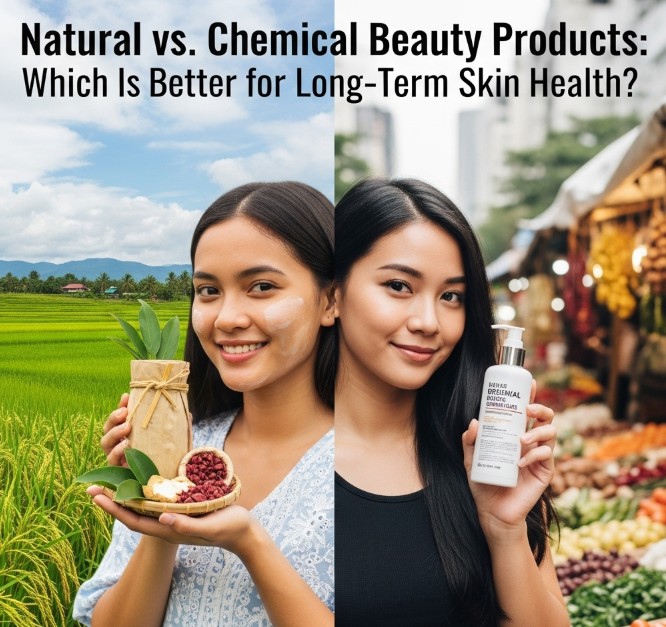
This article explores the ongoing debate between natural and chemical beauty products in the context of long-term skin health. While natural products are often seen as safer and more eco-friendly, chemical-based skincare is praised for its targeted and scientifically backed effectiveness. The essay argues that optimal skin health is not about choosing sides, but about understanding ingredients, personal skin needs, and responsible usage. A balanced approach—combining informed choices with ingredient transparency—leads to healthier, more sustainable skincare practices.
References
Draelos, Z. D. (2021). Cosmetic dermatology: Products and procedures (3rd ed.). Elsevier Health Sciences.
EcoWatch. (2020). Natural skincare: What to look for and what to avoid. EcoWatch. Retrieved from https://www.ecowatch.com
Lupo, M. P., & Cole, A. L. (2007). Cosmeceutical peptides. Dermatologic Therapy, 20(5), 343–349. https://doi.org/10.1111/j.1529-8019.2007.00144.x
Mukherjee, S., Date, A., Patravale, V., Korting, H. C., Roeder, A., & Weindl, G. (2016). Retinoids in the treatment of skin aging: An overview of clinical efficacy and safety. Clinical Interventions in Aging, 1(1), 327–348. https://doi.org/10.2147/CIA.S124326
Rathi, S. K., & Dinesh, V. (2011). Natural products as anti-aging agents: An overview. Journal of Dermatological Treatment, 22(2), 112–118.
Youniss, J., Bales, S., Christmas-Best, V., Diversi, M., McLaughlin, M., & Silbereisen, R. (2003). Youth civic engagement in the twenty-first century. Journal of Research on Adolescence, 12(1), 121–148. https://doi.org/10.1111/1532-7795.00027
Downloads
Published
Issue
Section
License
Copyright (c) 2025 EDUCATION AND INDUSTRY REVIEW

This work is licensed under a Creative Commons Attribution 4.0 International License.
How to Cite